
How to Identify Pure Honey and Avoid Counterfeit Products
Honey has been prized for centuries for its natural healing and nutritional properties. Genuine, unadulterated honey offers a wide range of scientifically supported health benefits:
• Wound healing: Honey’s antibacterial and anti-inflammatory properties help cleanse wounds, promote tissue growth, and reduce inflammation.
• Heart health: Regular consumption can improve heart health by regulating blood pressure, lowering “bad” LDL cholesterol and triglycerides, and raising “good” HDL cholesterol.
• Antioxidant and anti-inflammatory effects: Rich in flavonoids and phenolic compounds, pure honey protects the body from free radicals and helps reduce overall inflammation.
• Digestive health: Natural prebiotic oligosaccharides in honey support the growth of beneficial gut bacteria, improving digestion and gut balance.
• Diabetes management: When used in moderation as a substitute for refined sugar, honey may have a smaller impact on blood glucose levels and assist in better blood sugar control.
Global Demand and the Rise of Fake Honey
World demand for honey continues to grow each year — yet the number of bees and flowering plants that sustain honey production remains limited. To meet this demand, countries across Asia and Africa have become major suppliers, with China emerging as the world’s largest exporter.
However, experts and beekeepers warn that much of the honey sold in Malaysia, the UK, and Europe is not pure. It is often adulterated with cheap syrups derived from maize, rice, or sugarcane — a practice that undermines consumer trust and harms local beekeepers.
Adulterated Honey in Malaysia
In February 2024, Dr. Mohd Zulkifli Mustafa, senior lecturer at Universiti Sains Malaysia (USM), revealed that nearly 90% of Malaysia’s honey market — including stingless bee honey — is made up of adulterated or counterfeit products.
He noted that Malaysia’s problem mirrors a global issue: honey diluted or manipulated with artificial ingredients. Laboratory testing, he emphasized, is the only reliable way to verify genuine honey from counterfeit items.
European Tests Reveal the Same Trend
In 2023, the European Commission tested honey products sold across Europe and found that 147 out of 320 samples showed evidence of “extraneous sugar sources” — meaning added syrups or sweeteners.
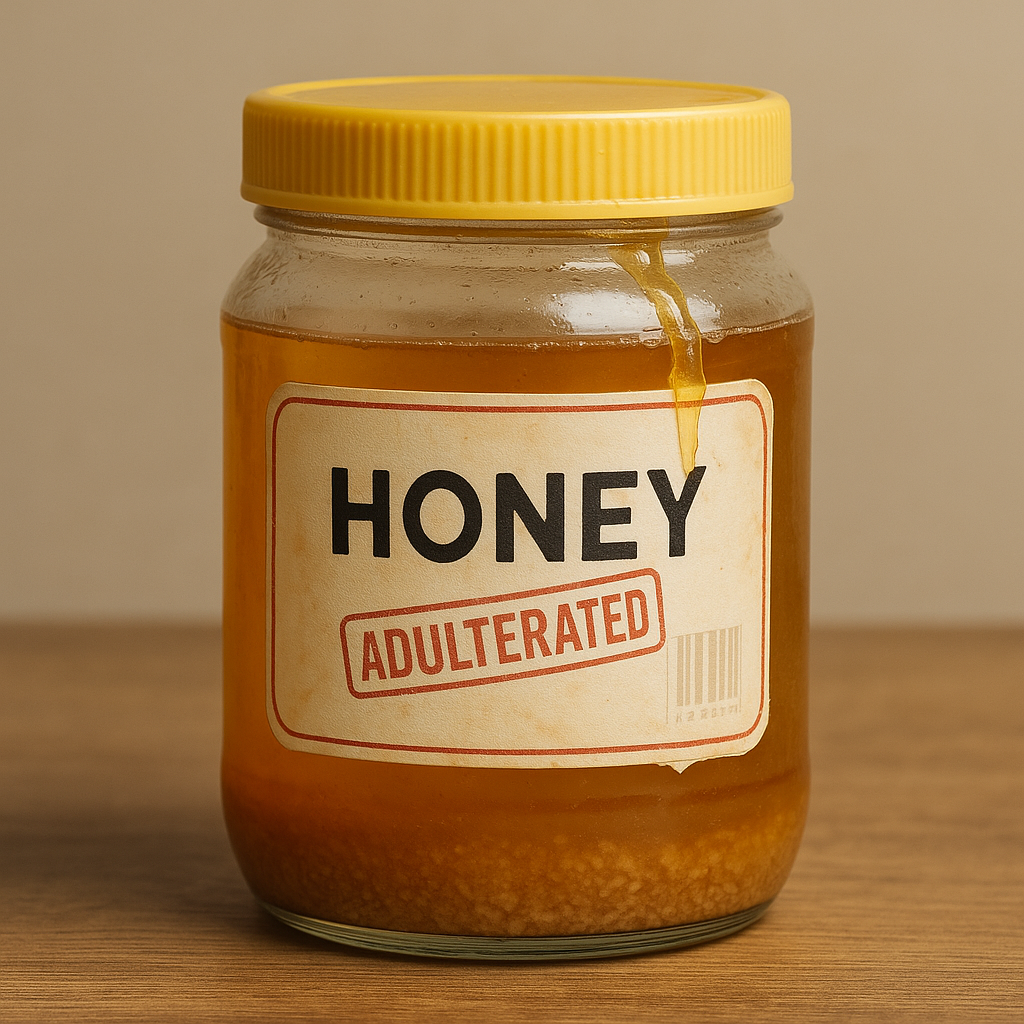
This comes as European honey production declines, while China’s honey exports rise, pushing prices down and increasing the risk of widespread honey adulteration.
UK beekeepers have also warned that the price of honey often reflects its authenticity — locally produced, raw honey from trusted beekeepers costs significantly more than supermarket brands, but guarantees purity.
How to Check if Honey Is Pure
Consumers can take several simple steps to assess the authenticity of the honey they buy:
- Check the label for “Pure Honey.”
It sounds obvious, but many counterfeit products omit this. If the label doesn’t clearly say “pure honey,” that’s a red flag. - Research the brand’s reputation.
Visit their website and social media pages. Look for genuine customer reviews and check if they are known within your country or the beekeeping community. - Assess transparency.
Trustworthy honey brands disclose where they are based, how their honey is harvested, and their quality-control practices. - Verify the source and packaging.
Be cautious with “blended” honey. Single-origin products are often more traceable and authentic. - Look for official accreditations.
Check whether the honey is approved by a local food authority or carries genuine certifications. Even non-Manuka honeys can hold verifiable quality standards.
A Simple Rule of Thumb
If a jar of honey is suspiciously cheap and the brand offers little or no information about its sourcing or production, it is most likely not pure honey.
When in doubt, buy from local beekeepers or established, accredited brands that value transparency and traceability.