
The global demand for Japanese products continues to grow rapidly, particularly across Southeast Asia. Japanese matcha, green tea, wagyu beef, sake, cosmetics and health products command premium prices because consumers associate them with quality, safety and strict manufacturing standards.
However, the premium attached to “Made in Japan” products has also created an attractive opportunity for counterfeiters. Today, fake Japanese products are no longer limited to copied logos or poor-quality packaging. Many counterfeit products closely imitate authentic branding, use Japanese language on labels, and even falsely claim to originate from famous Japanese regions.
Recent reports of counterfeit matcha being marketed overseas under names such as “Uji Matcha” highlight a broader issue affecting many Japanese exports—the misuse of geographical names, intellectual property and country-of-origin claims.
Why Japanese Tea Is Being Targeted
Japan exported a record volume of green tea in 2025, driven largely by the global popularity of matcha. As demand continues to exceed domestic production capacity, lower-cost foreign manufacturers have increasingly entered the market with products designed to resemble authentic Japanese tea.

Some products are manufactured entirely outside Japan while using:
• Japanese regional names (such as Uji, Shizuoka or Kagoshima)
• Japanese company names or brands
• Japanese-language packaging
• Traditional Japanese artwork
• Images of tea plantations or Mount Fuji
• Claims suggesting Japanese heritage despite foreign production
While not every product using Japanese branding is necessarily counterfeit, misleading branding can create confusion over the product’s true origin.
To address this issue, Japan’s tea industry has applied for national Geographical Indication (GI) protection for “Nihoncha” (Japanese tea), similar to the protections already afforded to Champagne, Parmigiano Reggiano and Kobe Beef.
Understanding Country of Origin vs Brand Origin
One of the most common misconceptions among consumers is that a Japanese brand automatically means the product was produced in Japan.
In reality, these are separate concepts. For example:
• A Japanese company may manufacture products in multiple countries.
• Tea may be blended in Japan using imported leaves.
• A foreign company may register a Japanese-sounding trademark.
• Products may display Japanese writing purely as a marketing feature.
For this reason, consumers should verify the country of origin, not simply the brand identity.
Technical Checks for Authentic Japanese Tea
- Verify the Country of Origin
The first step is to locate the mandatory origin declaration on the packaging.
Look for statements such as:
• Product of Japan
• Grown in Japan
• Produced in Japan
Be cautious if only vague wording appears, including:
• Japanese Style
• Japanese Recipe
• Inspired by Japan
• Packed for…
• Distributed by…
These descriptions do not confirm where the tea was cultivated. - Examine Manufacturer Information
Authentic Japanese products normally identify:
• Manufacturer name
• Factory address
• Japanese prefecture
• Importer or authorised distributor
Consumers should verify that the manufacturer actually exists. Many legitimate Japanese manufacturers maintain official websites listing authorised overseas distributors.
Counterfeit products frequently display incomplete addresses, generic company names or businesses that cannot be independently verified.
- Assess Packaging Quality
Japanese manufacturers generally maintain exceptionally high packaging standards.
Areas worth examining include:
- Print registration accuracy
- Font consistency
- Barcode quality
- Heat sealing
- Batch coding
- Date coding
- Lot numbers
Counterfeit packaging often exhibits:
- Blurred printing
- Colour variation
- Misaligned graphics
- Spelling mistakes
- Missing production codes
- Poor sealing quality
- Verify Batch and Traceability Information
Many premium Japanese tea producers include production traceability information such as:
• Lot numbers
• Production dates
• Factory identification
• QR codes linking to official websites
Consumers should ensure QR codes direct to legitimate manufacturer websites rather than unrelated domains.
For businesses importing Japanese products, retaining batch information also assists with product recalls and authenticity verification.
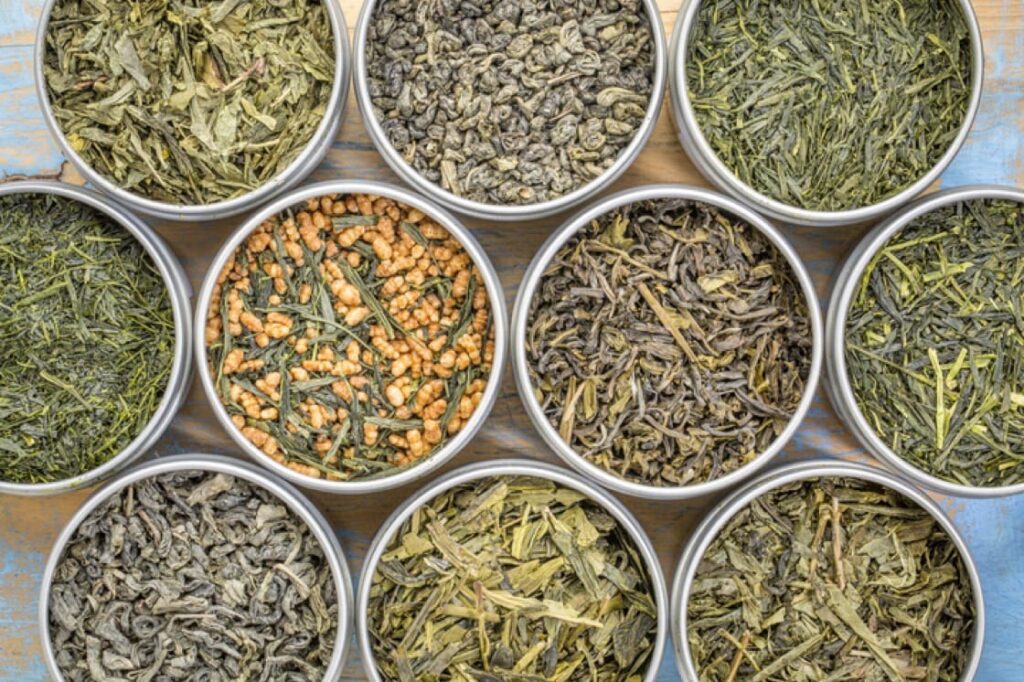
- Evaluate the Physical Characteristics Colour
High-quality ceremonial matcha contains high chlorophyll levels due to shade cultivation.
Authentic matcha generally displays:
- vivid jade green
- bright emerald appearance
- uniform colouring
Counterfeit or lower-grade products often appear:
- olive green
- yellow-green
- brown
- dull green
Discolouration may indicate oxidation, poor storage or lower-grade raw materials.
Particle Size
Premium Japanese matcha is traditionally stone milled to approximately 5–10 microns.
This ultra-fine particle size produces:
- smooth texture
- minimal grittiness
- excellent suspension in water
Coarser powders may indicate industrial milling or lower-quality leaves. A simple field test involves rubbing a small quantity between your fingers or across white paper. Authentic matcha leaves a smooth, almost creamy streak, while inferior powders feel gritty or clump together.
Aroma
Authentic Japanese matcha possesses a fresh aroma with:
- sweet vegetal notes
- marine characteristics
- fresh-cut grass
- subtle roasted notes depending on style
Counterfeit or poor-quality products frequently exhibit:
- stale odours
- excessive bitterness
- earthy smells
- little overall aroma
Taste Profile
Premium Japanese matcha should display:
- pronounced umami
- natural sweetness
- low bitterness
- long clean finish
Poor-quality or imitation products often produce:
- excessive bitterness
- harsh astringency
- chalky mouthfeel
- short finish
Intellectual Property Red Flags
Counterfeit Japanese products frequently infringe multiple forms of intellectual property.
These may include:
- trademark infringement
- copyright infringement (copied artwork)
- trade dress infringement (overall packaging appearance)
- misuse of geographical indications
- false country-of-origin declarations
Increasingly, counterfeiters are reproducing entire package layouts rather than merely copying logos.
Businesses conducting due diligence should compare suspect packaging with official manufacturer product catalogues rather than relying solely on trademark searches.
Buying Online: Additional Risks
Many counterfeit Japanese products are sold through online marketplaces and social media.
Before purchasing:
- Verify the seller’s identity.
- Check whether the seller is an authorised distributor.
- Review customer feedback critically.
- Compare packaging with images on the manufacturer’s official website.
- Be cautious of unusually low prices.
Price remains one of the strongest indicators of authenticity. Premium Japanese tea involves significant cultivation and processing costs, making heavily discounted products inherently suspicious.
Looking Beyond Tea
The same verification principles apply across many premium Japanese products, including:
- Wagyu beef
- Japanese whisky
- Sake
- Cosmetics
- Health supplements
- Kitchen knives
- Electronics
- Luxury goods
Consumers should verify both the origin of the product and the credibility of the manufacturer before relying on branding alone.
Conclusion
Counterfeiters are becoming increasingly sophisticated, making it difficult to distinguish genuine Japanese products from imitations through packaging alone.
Consumers and businesses should adopt a layered approach to verification by examining the country of origin, manufacturer details, packaging quality, traceability information, physical product characteristics and authorised distribution channels.
As Japan strengthens legal protection through Geographical Indications and increased international intellectual property enforcement, consumer awareness remains one of the most effective defences against counterfeit products entering the Southeast Asian market.