
Malaysia’s Ministry of Domestic Trade and Cost of Living has uncovered an operation involving the alleged diversion and repackaging of subsidised cooking oil for resale as prayer oil in Kuala Lumpur.
The operation, conducted under Ops Tiris 4.0, followed approximately two months of intelligence gathering and supply profiling. Four premises in Sentul and Chow Kit were raided, involving two licensed wholesalers and two unlicensed premises.
According to the ministry, the operation uncovered three interlinked cases and resulted in the seizure of approximately nine tonnes of cooking oil, valued at around RM165,000.
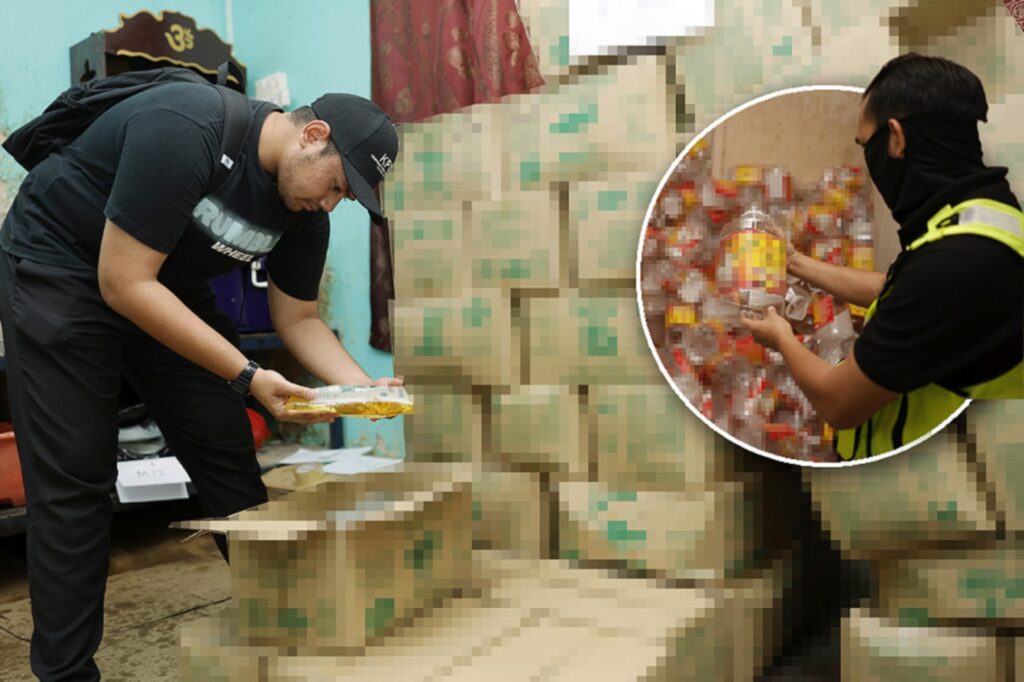
Repackaging Operation
Authorities said the suspected syndicate obtained one-kilogramme packets of subsidised cooking oil from packers and wholesalers before transferring the oil into bottles for resale as prayer oil.
The ministry reported that the oil was either sold without additional substances or with small quantities of additives. The repackaged product was subsequently supplied to retailers in the Klang Valley.
The cooking oil was reportedly purchased at approximately RM2.45 per litre and resold for around RM7.50 per litre, representing a price difference of approximately RM5 per litre.
One of the premises was estimated to have processed approximately 200 bottles, or nearly one tonne, of subsidised cooking oil per day. Authorities believe the premises had been operating for approximately six months.
Five Individuals Detained
Five individuals aged between 30 and 35 were detained during the operation. According to the ministry, those detained comprised three Indian nationals, one Sri Lankan national and a Malaysian man working as a van driver.
The case is being investigated under the Control of Supplies Act 1961 and the Trade Descriptions Act 2011, including matters relating to the use of unregistered labels.
Supply-Chain Monitoring
The case illustrates the challenges authorities face in monitoring subsidised products after they enter the distribution chain.
The investigation reportedly involved intelligence gathering and supply profiling before enforcement action was undertaken. This highlights the role of supply-chain monitoring in identifying unusual purchasing patterns, distribution activity and potential diversion of controlled or subsidised goods.
Repackaging can also make it more difficult to establish the original source of a product once it has been removed from its authorised packaging.
For businesses operating in sectors involving regulated, subsidised or controlled products, maintaining appropriate records of purchasing, distribution and downstream customers can therefore assist in identifying irregularities and supporting subsequent investigations.
The Kuala Lumpur operation demonstrates how enforcement investigations can involve not only the premises where products are discovered, but also the supply, repackaging and distribution activities connected to them.
End