
A recent announcement by the Metropolitan Police in London highlighted how technology is rapidly transforming modern security operations. Following successful trials, police drones are expected to provide coverage across all 32 London boroughs by 2027. The drones are being used to provide live intelligence, track suspects, assess incidents before officers arrive, and improve decision-making during emergencies.
While such capabilities may appear futuristic, similar technologies are already being used across Malaysia and Singapore in both law enforcement and commercial settings. Increasingly, businesses are recognising that traditional security measures alone are no longer sufficient to address evolving threats such as theft, fraud, unauthorised access, vandalism, and internal misconduct.
From CCTV to Integrated Electronic Monitoring
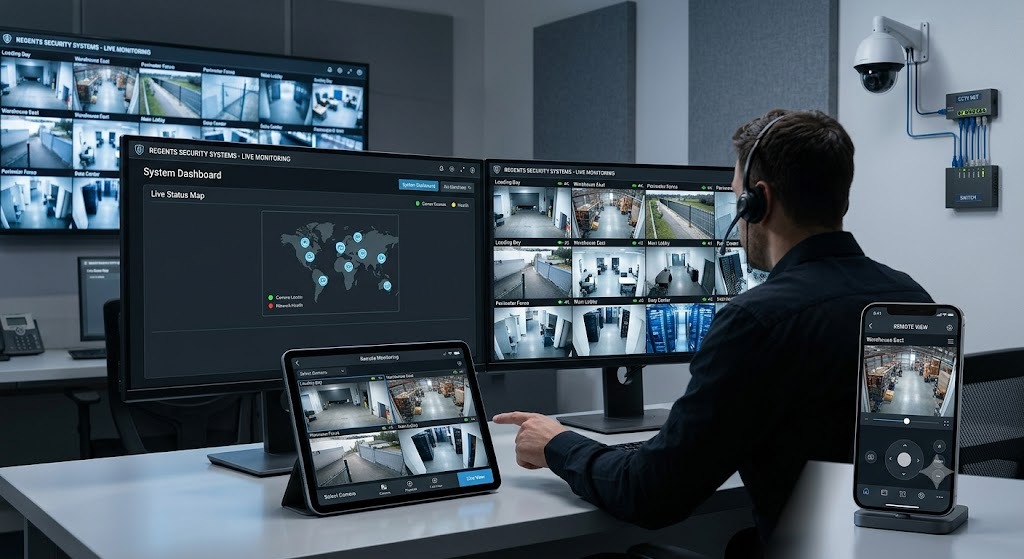
Many organisations continue to rely on conventional CCTV systems that simply record events for later review. However, advances in technology now allow businesses to adopt integrated monitoring solutions capable of providing real-time alerts and actionable intelligence.
Modern electronic monitoring systems may include:
- Networked CCTV systems with remote viewing capabilities;
- Video analytics capable of detecting unusual behaviour or movement;
- Licence plate recognition systems for vehicle access control;
- Access control systems linked to employee credentials;
- Intrusion detection and perimeter monitoring sensors;
- Body-worn cameras for security personnel;
- Centralised command platforms that consolidate multiple data sources.
These systems enable security teams to respond proactively rather than react after an incident has occurred.
The Growing Role of Drones
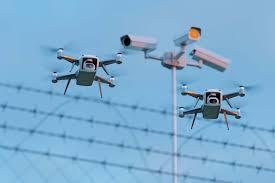
Commercial drone technology has become increasingly affordable and practical for businesses operating large premises.
Drones can be deployed to:
- Conduct perimeter patrols of factories and warehouses;
- Monitor remote assets and construction sites;
- Detect unauthorised entry into restricted areas;
- Assess emergency situations without exposing personnel to unnecessary risk;
- Provide aerial documentation following accidents, fires, or security incidents;
- Support investigations involving theft, sabotage, or asset damage.
Unlike fixed cameras, drones offer mobility and can rapidly cover large areas that would otherwise require significant manpower.
For businesses operating logistics facilities, industrial parks, plantations, ports, or expansive commercial sites, drone-assisted monitoring can significantly enhance situational awareness.
Similar Developments in Malaysia
Malaysia has already witnessed increased use of drone technology by government agencies and private organisations.
The Royal Malaysia Police (PDRM) has utilised drones during public events, search-and-rescue operations, flood response activities, and enforcement operations to improve operational visibility and officer safety.
Meanwhile, sectors such as oil and gas, plantations, utilities, construction, and infrastructure maintenance have increasingly adopted drones for inspection and surveillance purposes. Security service providers have also begun offering drone-assisted patrol services to supplement traditional guarding arrangements.
In addition, Malaysia’s extensive adoption of CCTV in urban centres under various safe city initiatives demonstrates an ongoing shift towards technology-enabled security management.
Singapore’s Smart Nation Approach
Singapore has arguably moved even further in integrating technology into security and public safety.
The Singapore Police Force has employed unmanned aerial systems to support crowd monitoring, major event security, and incident assessments. The Home Team has also explored the use of robotics, video analytics, and artificial intelligence to improve operational effectiveness.
Many commercial developments in Singapore now incorporate:
- Intelligent video analytics;
- Automated visitor management systems;
- Integrated access control;
- Facial recognition technologies in selected applications;
- Centralised security operations centres.
The city-state’s Smart Nation initiative has accelerated the adoption of digital solutions aimed at improving efficiency while maintaining high standards of public safety.
Balancing Security and Privacy
As surveillance technologies become more sophisticated, businesses must also consider their legal and ethical responsibilities.
In Malaysia, organisations collecting and processing personal data must comply with the Personal Data Protection Act 2010 (PDPA). Similarly, businesses operating in Singapore are subject to obligations under the Personal Data Protection Act 2012.
The use of drones, facial recognition, and advanced analytics should therefore be supported by clear policies governing:
- The purpose of monitoring activities;
- Data collection and retention periods;
- Access to recorded information;
- Notification requirements where appropriate;
- Safeguards against misuse of collected data.
Maintaining transparency and accountability helps preserve trust among employees, customers, and other stakeholders.
Technology as a Force Multiplier
The London experience demonstrates that technology can act as a force multiplier rather than a replacement for human judgement. Drones reportedly reached incidents within minutes and frequently became the first resource on scene, providing officers with critical intelligence before physical deployment.
Businesses in Malaysia and Singapore face similar pressures: rising operating costs, increasing security risks, and expectations for rapid response. Leveraging electronic monitoring systems and drone technology allows organisations to extend their security coverage, improve incident response times, and deploy manpower more efficiently.
As threats continue to evolve, organisations that embrace carefully governed technological solutions are likely to be better positioned to protect their people, assets, and operations. The question is no longer whether drones and electronic monitoring have a place in business security, but how businesses can implement these tools responsibly and effectively.